

Botanical medicines are defined by biological variability rather than chemical uniformity. A plant identified as a single species is never chemically identical across harvests, even when grown under controlled conditions. Genotype, soil chemistry, climate, harvest timing, and post-harvest handling all shape secondary metabolite expression. Standardized extraction arose as an industrial response to this variability, attempting to constrain it through analytical and manufacturing controls. The unresolved issue is whether this constraint reliably improves efficacy and safety, or whether it removes clinically meaningful chemical context.
In general, standardization refers to adjusting an extract so that it contains a defined concentration of one or more marker compounds. These markers are used to assert consistency, support claims of guaranteed potency, and satisfy pharmaceutical manufacturing expectations. While this approach improves batch-to-batch reproducibility, it does not inherently establish therapeutic equivalence. Biological systems do not respond to isolated molecules in the same way they respond to complex phytochemical matrices.
Marker Compounds and Manufacturing Logic
Marker compounds serve several legitimate purposes. They assist with species identification, confirm manufacturing consistency, and provide analytical anchors for Good Manufacturing Practice compliance. From a formulation standpoint, marker-based standardization enables smaller dosage forms, higher apparent potency, and removal of unwanted or allergenic constituents. It also reduces the financial burden of conducting comprehensive pharmacological and clinical research. They are selected primarily for analytical convenience rather than definitive responsibility for therapeutic outcomes. Analytical methods are often optimized for the marker itself, not for the full range of compounds that contribute to pharmacological activity. As a result, a product can meet its marker specification while failing to reproduce clinical effects.
Toward Functional Standardization and Phytoequivalence
More rigorous approaches begin with a traditional galenic extract and apply standardization only after its functional properties are characterized. Other approaches rely on chromatographic fingerprinting of multiple compounds with known pharmacological or pharmacokinetic relevance. The most comprehensive strategy integrates comparative extraction studies, dosage form evaluation, and human clinical trials.
From these efforts emerged the concept of phytoequivalence. Two products are phytoequivalent when they share a comparable phytochemical spectrum, achieve similar circulating levels of marker compounds following oral administration, and produce the same clinically relevant physiological endpoint.
Echinacea and the Consequences of Reductionist Standardization
Echinacea provides a clear example of how marker-driven standardization can fail. Clinical trials evaluating Echinacea have produced inconsistent results, largely because chemically distinct preparations were treated as equivalent. Species misidentification, inconsistent plant parts, variable harvest times, and incompatible extraction methods all contributed to this confusion.
Three species dominate commercial use: Echinacea angustifolia, Echinacea pallida, and Echinacea purpurea. Ethanol extracts preferentially concentrate alkylamides and phenolic compounds, particularly from roots, producing anti-inflammatory effects that modulate infection-related symptoms. Water extracts contain polysaccharides and glycoproteins such as arabinorhamnogalactans that enhance immune signaling through cytokine modulation and are more abundant in aerial parts (Bauer et al., 1988; Sloley et al., 2001; Nusslein et al., 2000).
Solvent fractionation studies demonstrate that biological activity partitions differently across species. Lipophilic fractions show substantial activity in E. purpurea and E. angustifolia, while E. pallida exhibits a distinct activity profile. These findings indicate species-specific synergy rather than a universal active principle (Bauer et al., 1988).
Taxonomic complexity further undermines simplistic standardization. Introgression and hybridization among Echinacea species blur genetic boundaries, making strict chemical consistency unattainable without genetic verification (Binns et al., 2002).
Guarana (Paullinia cupana) and Fortified Standardization
Guarana illustrates a different failure mode. Standardization focuses on caffeine content, the dominant stimulant constituent. Some products fortify extracts with added caffeine while selectively excluding tannins and other methylxanthines to accelerate absorption. This approach improves predictability of stimulant effects but alters the pharmacological character of the preparation, shifting it toward a modified caffeine delivery system.
Ginkgo biloba and Successful Functional Standardization
Ginkgo biloba extract EGb 761 represents a case where standardization aligns with clinical efficacy. This extract is defined by a tightly controlled constituent profile, approximately 24 percent flavone glycosides and 6 percent terpene lactones, with strict exclusion of ginkgolic acids due to their allergenic and cytotoxic properties (Ginkor, 2003).
Flavonol glycosides contribute antioxidant activity (Ding et al., 2009). Terpene trilactones modulate platelet-activating factor signaling and inhibitory neurotransmitter receptors (Braquet, 1987; Heads et al., 2008; Huang et al., 2004). Removal of ginkgolic acids reduces mutagenic and cytotoxic risk (Koch et al., 2000; Hecker et al., 2002; Westendorf & Regan, 2000).
Clinical trials consistently demonstrate efficacy for mild-to-moderate dementia only when this standardized profile is preserved (McKeage & Lyseng-Williamson, 2018). Despite strong evidence for EGb 761, market practice has shifted toward dose fixation without ensuring compositional equivalence. Comparative analyses show substantial divergence between approved drug extracts and dietary supplements, even when labeled doses match (Trabert & Seifert, 2023).
Grape Seed Extract and the Limits of Technological Enhancement
A randomized noninferiority trial comparing Vitis vinifera seed extract to a micronized purified flavonoid fraction found no superiority of the technologically enhanced product for chronic venous disease outcomes. Both groups showed comparable symptom improvement, and grape seed extract alone reduced calf circumference after eight weeks (Kim et al., 2024).
Turmeric, Curcuminoids, and the Microbiome Constraint
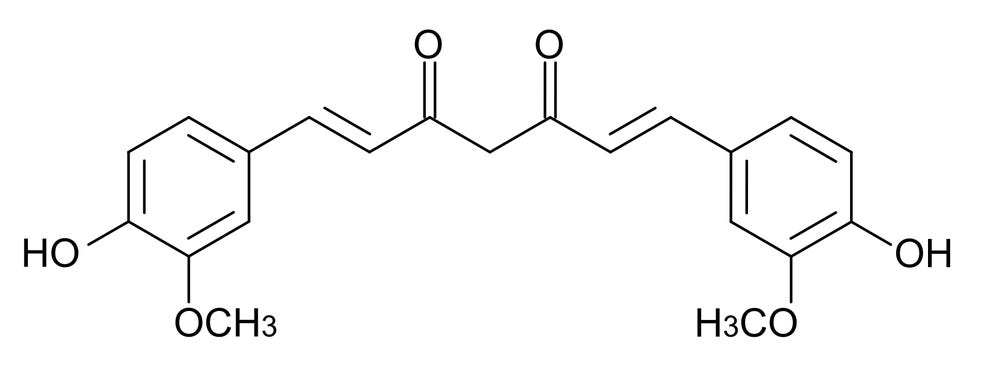
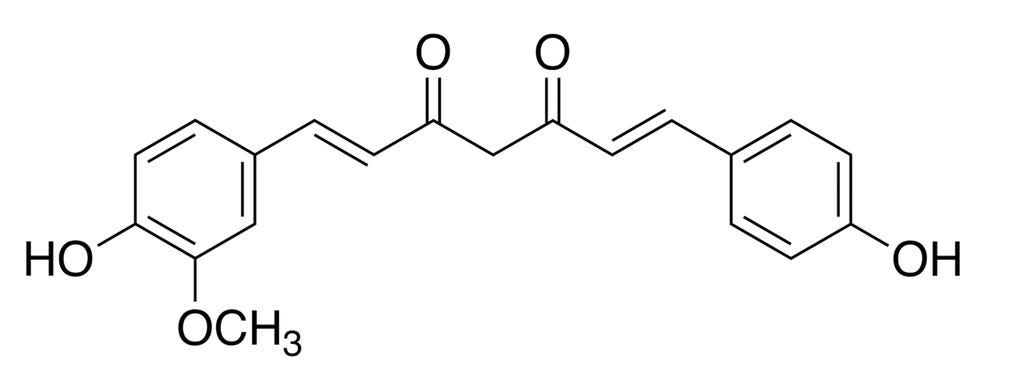
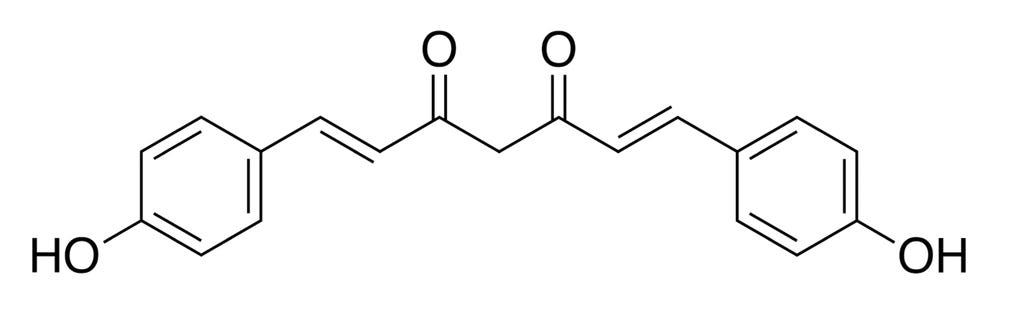
Curcumin refers to a family of structurally related diarylheptanoids rather than a single molecule. These compounds exhibit poor systemic bioavailability yet exert broad physiological effects.
curcumin I or curcumin [1,7-bis(4-hydroxy-3-methoxyphenyl)-1,6-heptadiene-3,5-dione]
curcumin II or demethoxycurcumin [(1E,6E)-1-(4-Hydroxy-3-methoxyphenyl)-7-(4-hydroxyphenyl)hepta-1,6-diene-3,5-dione]
curcumin III or bisdemethoxycurcumin [(1E,6E)-1,7-Bis(4-hydroxyphenyl)hepta-1,6-diene-3,5-dione]
Servida et al. (2024) found that curcumin is transformed by the beneficial bacteria in your gut into more potent, bioavailable compounds. At the same time, curcumin helps beneficial bacteria thrive. Bioavailability has always been an issue for turmeric, and this interaction with the gut potentially explain why the plant still has a wide range of activities. This study found that curcumin supports healthy blood sugar levels by increasing bacteria that produce beneficial short-chain fatty acids, improving insulin sensitivity; improving the function of insulin-producing cells; enhancing glucose uptake in muscles and fat tissue; promoting the release of gut hormones that regulate blood sugar; and strengthening a healthy gut barrier, reducing the risk of harmful compounds entering the bloodstream and triggering inflammation.
Aggressive standardization through isolation or nanotechnology may increase plasma concentrations while erasing microbiome-mediated mechanisms, raising unresolved questions about tradeoffs between absorption and distributed biological activity.
When Different Standardized Products Display Contrasting Therapeutics
Clinical evidence is clearest when a named, chemically defined extract is repeatedly tested across trials and indications. In those cases, “standardization” functions less as a marketing claim and more as a reproducible pharmaceutical identity. The same literature also shows the inverse, namely that standardization to a limited marker set can preserve analytical consistency while failing to preserve therapeutic performance when the clinical context, extract type, or co-constituent spectrum differs.
St John’s wort (SJW) illustrates both outcomes. Multiple trials of the standardized Hypericum perforatum extract WS 5570 show superiority to placebo for mild to moderate major depression. Kasper et al. (2002) found that WS 5570 showed a significantly greater reduction in HAM-D scores compared to placebo over 6 weeks. In their study. Szegedi et al. (2005) found that WS 5570 is as effective as paroxetine for moderate to severe depression, comparing doses of SJW at 900–1800 mg/day of WS 5570 to 20–40 mg of paroxetine. The SJW treatment had significantly fewer side effects.
LI 160 was the standardized product for most the early Cochrane reviews. An early, key trial, Philipp et al. (1999) compared LI 160 to both a placebo and a synthetic antidepressant (imipramine) finding that LI 160 was superior to placebo and equivalent to imipramine for mild to moderate depression, but with significantly better tolerability. A large-scale French trial (Lecrubier et al., 2002) reinforced its efficacy in major depression of moderate intensity, demonstrating significant antidepressant effects of 900 mg/day of LI 160 over 6 weeks. In contrast, in a trial using LI 160 for severe major depression did not separate from placebo, indicating that the therapeutic effect of standardization does not imply portability for illness of greater severity (Shelton et al., 2001).
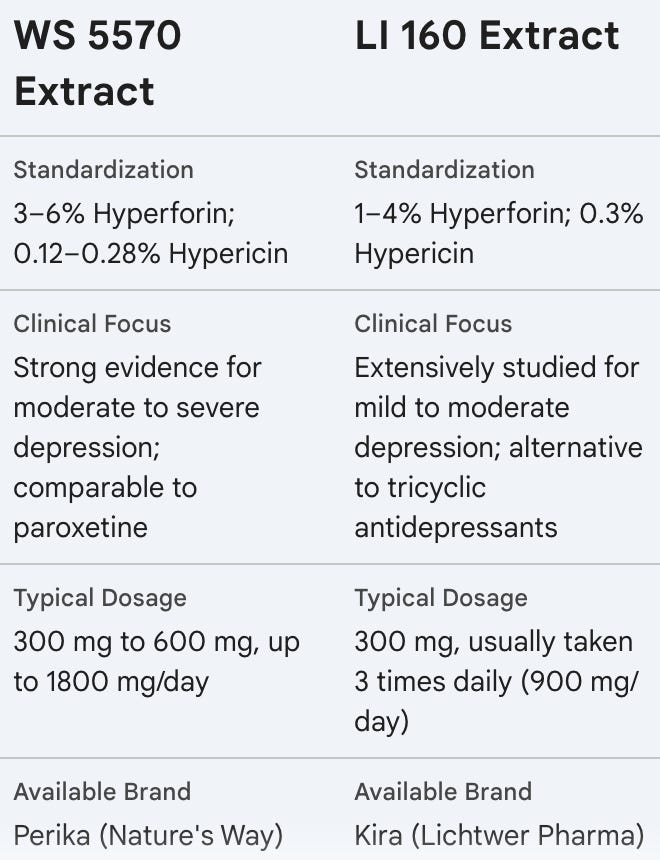
The primary difference lies in the hyperforin content. WS 5570 is standardized to a higher concentration of hyperforin (up to 6%), which is currently viewed as the primary active constituent for mood support. LI 160 focuses more on a higher hypericin content (0.3%).
Saw palmetto provides a sharper demonstration that extract identity matters as much as dose. The hexanic lipidosterolic extract (often marketed as Permixon) has evidence of symptomatic benefit and anti-inflammatory effects in men with lower urinary tract symptoms associated with benign prostatic hyperplasia (Latil et al., 2015; Alcaraz et al., 2021). The standardization includes free fatty acids (>90%) as well as a specific ratio of saturated and unsaturated fatty acids of 1:1.1 to 1:1.3. It also standardizes esterified fatty acids content (~7%) and phytosterol at 0.2-0.4 % (Blair, 2022; Booker et al., 2014)
However, a major randomized trial using a different commercial saw palmetto extract found no symptomatic improvement versus placebo (Bent et al., 2006). The second product was a proprietary carbon dioxide extract from Indena USA containing ~91% total fatty acids and 0.33 % total phytosterols This divergence indicates that Serenoa repens extracts are not a single drug-like object unless the solvent system and compositional constraints are specified.
Conclusion
These cases support a practical rule for standardized herbal preparations. Standardization improves therapeutic reliability when it locks in a multidimensional chemical identity that has already been clinically validated, and it can reduce or erase activity when it narrows identity to a marker that is weakly linked to the clinical mechanism or when a different extract type is substituted under a common botanical name.
Standardized extraction is a tool rather than a guarantee. When anchored to clinical endpoints, pharmacokinetics, and safety, it can enhance reliability and therapeutic value. When anchored solely to marker compounds, it produces chemically precise but biologically fragile products.
References
1. Alcaraz, A., Rodríguez-Antolín, A., Carballido-Rodríguez, J., Castro-Díaz, D., Medina-Polo, J., Fernández-Gómez, J. M., Ficarra, V., Palou, J., Angulo, J. C., Esteban-Fuertes, M., Cózar-Olmo, J. M., Pérez-León, N., Molero-García, J. M., Fernández-Pro Ledesma, A., Brenes-Bermúdez, F. J., & Manasanch, J. (2021). Efficacy and tolerability of the hexanic extract of Serenoa repens compared to tamsulosin in moderate-to-severe LUTS-BPH patients. Scientific Reports, 11, 19401. https://doi.org/10.1038/s41598-021-98586-5
2. Bauer, R., Jurcic, K., Puhlmann, J., & Wagner, H. (1988). Immunologic in vivo and in vitro studies on Echinacea extracts. Arzneimittelforschung, 38, 276–281.
3. Bent, S., Kane, C., Shinohara, K., Neuhaus, J., Hudes, E. S., Goldberg, H., & Avins, A. L. (2006). Saw palmetto for benign prostatic hyperplasia. The New England Journal of Medicine, 354(6), 557–566. https://doi.org/10.1056/NEJMoa053085
4. Binns, S. E., Baum, B. R., & Arnason, J. T. (2002). A taxonomic revision of Echinacea (Asteraceae: Heliantheae). Systematic Botany, 27(3), 610–632. https://doi.org/10.1043/0363-6445-27.3.610
5. Blair, H. A. (2022). Hexanic extract of Serenoa repens (Permixon®): A review in symptomatic benign prostatic hyperplasia. Drugs, 82(8), 841–854. https://doi.org/10.1007/s40265-022-01690-y
6. Booker, A., Suter, A., Krnjic, A., Strassel, B., Zloh, M., Said, M., & Heinrich, M. (2014). A phytochemical comparison of saw palmetto products using gas chromatography and H nuclear magnetic resonance spectroscopy metabolomic profiling. Journal of Pharmacy and Pharmacology, 66(6), 811–822. https://doi.org/10.1111/jphp.1219
7. Braquet, P. (1987). The ginkgolides: Potent platelet-activating factor antagonists isolated from Ginkgo biloba L. Chemistry, pharmacology, and clinical applications. Drugs of the Future, 12(7), 643–699. https://doi.org/10.1358/dof.1987.012.07.77903
8. Ding, X.-P., Qi, J., Chang, Y.-X., Mu, L.-L., Zhu, D.-N., & Yu, B.-Y. (2009). Quality control of flavonoids in Ginkgo biloba leaves by high-performance liquid chromatography with diode-array detection and online radical scavenging activity detection. Journal of Chromatography A, 1216(11), 2204–2210. https://doi.org/10.1016/j.chroma.2008.08.115
9. Ginkor. (2003). EGb 761: Ginkgo biloba extract. Drugs in R&D, 4(3), 188–193. https://doi.org/10.2165/00126839-200304030-00009
10. Heads, J. A., Hawthorne, R. L., Lynagh, T., & Lynch, J. W. (2008). Structure–activity analysis of ginkgolide binding in the glycine receptor pore. Journal of Neurochemistry, 105(4), 1418–1427. https://doi.org/10.1111/j.1471-4159.2008.05244.x
11. Hecker, H., Johannisson, R., Koch, E., & Siegers, C. P. (2002). In vitro evaluation of the cytotoxic potential of alkylphenols from Ginkgo biloba L. Toxicology, 177(2–3), 167–177. https://doi.org/10.1016/S0300-483X(02)00189-0
12. Huang, S.-H., Duke, R. K., Chebib, M., Sasaki, K., Wada, K., & Johnston, G. A. R. (2004). Ginkgolides, diterpene trilactones of Ginkgo biloba, as antagonists at recombinant α1β2γ2L GABAA receptors. European Journal of Pharmacology, 494(2–3), 131–138. https://doi.org/10.1016/j.ejphar.2004.04.051
13. Kasper, S., Volz, H. P., Möller, H. J., Dienel, A., & Kieser, M. (2002). Efficacy of St. John’s wort extract WS 5570 in major depression: A double-blind, placebo-controlled trial. The American Journal of Psychiatry, 159(8), 1361–1369. https://doi.org/10.1176/appi.ajp.159.8.1361
14. Kasper, S., Gastpar, M., Möller, H.-J., Müller, W. E., Volz, H.-P., Dienel, A., & Kieser, M. (2006). Superior efficacy of Hypericum perforatum extract WS 5570 compared to placebo in patients with major depression. BMC Medicine, 4, 14. https://doi.org/10.1186/1741-7015-4-14
15. Kim, S.-M., Joh, J.-H., Jung, I.-M., Kim, M.-J., Lee, S.-S., Hwang, H.-P., Kang, J.-M., Jung, H.-J., Yang, S.-S., Min, S.-K., Yoo, Y.-S., Gwon, J.-G., Park, H.-S., & Lee, T. (2024). Vitis vinifera seed extract versus micronized purified flavonoid fraction for patients with chronic venous disease: A randomized noninferiority trial. Annals of Vascular Surgery, 109, 177–186. https://doi.org/10.1016/j.avsg.2024.06.011
16. Koch, E., Jaggy, H., & Chatterjee, S. S. (2000). Evidence for immunotoxic effects of crude Ginkgo biloba L. leaf extracts using the popliteal lymph node assay in the mouse. International Journal of Immunopharmacology, 22(3), 229–236. https://doi.org/10.1016/S0192-0561(99)00080-6
17. Latil, A., Pétrissans, M.-T., Rouquet, J., Robert, G., de la Taille, A., & Vela-Navarrete, R. (2015). Effects of hexanic extract of Serenoa repens (Permixon® 160 mg) on inflammation biomarkers in lower urinary tract symptoms related to benign prostatic hyperplasia. The Prostate, 75(16), 1857–1867. https://doi.org/10.1002/pros.23059
18. Lecrubier, Y., Clerc, G., Didi, R., & Kieser, M. (2002). Efficacy of Hypericum perforatum extract WS 5570 in major depression. The American Journal of Psychiatry, 159(8), 1361–1366. https://doi.org/10.1176/appi.ajp.159.8.1361
19. McKeage, K., & Lyseng-Williamson, K. A. (2018). Ginkgo biloba extract EGb 761® in the symptomatic treatment of mild-to-moderate dementia. Drugs & Therapy Perspectives, 34(8), 358–366. https://doi.org/10.1007/s40267-018-0537-8
20. Nusslein, B., Kurz, W., Bauer, R., & Wagner, H. (2000). Alkamides from Echinacea species: Structural diversity and biological activity. Journal of Natural Products, 63, 1615–1618.
21. Philipp, M., Kohnen, R., & Hiller, K. O. (1999). Hypericum extract versus imipramine or placebo in patients with moderate depression: Randomised multicentre study of treatment for eight weeks. BMJ (Clinical Research ed.), 319(7224), 1534–1539. https://doi.org/10.1136/bmj.319.7224.1534
22. Servida, S., Piontini, A., Gori, F., Tomaino, L., Moroncini, G., De Gennaro Colonna, V., La Vecchia, C., & Vigna, L. (2024). Curcumin and gut microbiota: A narrative overview with focus on glycemic control. International Journal of Molecular Sciences, 25(14), 7710. https://doi.org/10.3390/ijms25147710
23. Shelton, R. C., Keller, M. B., Gelenberg, A., Dunner, D. L., Hirschfeld, R., Thase, M. E., Russell, J., Lydiard, R. B., Crits-Cristoph, P., Gallop, R., Todd, L., Hellerstein, D., Goodnick, P., Keitner, G., Stahl, S. M., & Halbreich, U. (2001). Effectiveness of Hypericum perforatum in major depression. JAMA, 285(15), 1978–1986. https://doi.org/10.1001/jama.285.15.1978
24. Sloley, B. D., Urichuk, L. J., Tywin, C., Coutts, R. T., Pang, P. K. T., & Shan, J. J. (2001). Comparison of chemical components and antioxidant capacity of different Echinacea species. Journal of Pharmacy and Pharmacology, 53, 849–857.
25. Szegedi, A., Kohnen, R., Dienel, A., & Kieser, M. (2005). Acute treatment of moderate to severe depression with hypericum extract WS 5570 (St John’s wort): Randomised controlled double blind non-inferiority trial versus paroxetine. BMJ (Clinical Research ed.), 330(7490), 503–506. https://doi.org/10.1136/bmj.38356.655266.82
26. Trabert, M., & Seifert, R. (2023). Critical analysis of ginkgo preparations: Comparison of approved drugs and dietary supplements marketed in Germany. Naunyn-Schmiedeberg’s Archives of Pharmacology, 397(1), 451. https://doi.org/10.1007/s00210-023-02602-6
27. Westendorf, J., & Regan, J. (2000). Induction of DNA strand-breaks in primary rat hepatocytes by ginkgolic acids. Pharmazie, 55(11), 864–865.