

Trichoderma species have adapted to a wide range of ecosystems, where they influence ecosystem health and predominant the mycoflora community in both native and agricultural soils (Guzmán-Guzmán et al., 2019; Kabir et al., 2024).
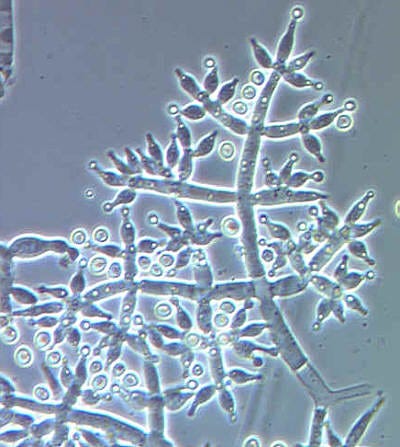
In a New Phytologists commentary, Harman discussed how endophytic, symbiont fungi, such as Trichoderma spp., colonize plant roots without causing disease. This fungus had been used as an effective biocontrol agents to limit the growth of other plant pathogens.
After the initial penetration of plant tissue, the fungus is sequestered until chemical communication, using small fungal proteins and metabolites. This enables it to grow within plant root tissue. The chemical cross talk induces systemic effects in the plant, which alters plant gene expression in beneficial ways, resulting in greater plant growth, improved seed quality, increased nitrogen use efficiency, increased plant growth under stress, and systemic resistance to diseases.
What appears to underpin these effects is an increase in photosynthetic efficiency in the effected plant leaf tissue. The fungus enhanced expression of genes encoding enzymes used in several pathways in plants that convert oxidized glutathione and ascorbate to the reduced form. These antioxidants help prevent cellular damage from active oxygen species, whose formation is accelerated under increased rates of photosynthesis.
From a previous post, American ginseng sterol binding of ginsenosides translates into inhibiting some root-colonizing fungi, such as Trichoderma species (Nicol et al., 2002), while also stimulating growth of other pathogens, including Cylindrocarpon destructans, Pythium and Phytophthora (Nicol et al., 2003). In these taxa ginsenosides instead function as substrates and chemical cues. This speaks to a unique role for the ginsenosides that works differently than a number of other plants in defining the rhizosphere communities associated with its root system.
Reference:
Harman, G.E. (2011) Multifunctional fungal plant symbionts: new tools to enhance plant growth and productivity, New Phytologist 189: 647–649. https://doi.org/10.1111/j.1469-8137.2010.03614.x
Guzmán-Guzmán, P., Porras-Troncoso, M. D., Olmedo-Monfil, V., & Herrera-Estrella, A. (2019). Trichoderma Species: Versatile Plant Symbionts. Phytopathology®, 109(1), 6–16. https://doi.org/10.1094/PHYTO-07-18-0218-RVW.
Kabir AH, Thapa A, Hasan R, Parvej R. 2024. Local signal from Trichoderma afroharzianum T22 induces host transcriptome and endophytic microbiome leading to growth promotion in sorghum. Journal of Experimental Botany 75, https://doi.org/10.1093/jxb/erae340.