

Our pedagogical and technical approach to phytochemistry with students in the Herbal Product Design program is to have them understand the relationship between structure and function. We use phytochemical structure to provide two different pieces of information. It helps predict whether the compound will leave the plant matrix and enter a particular extraction solvent. And, it helps determine whether an analytical instrument can separate, detect, identify, and quantify that compound after extraction. A solvent may extract a compound efficiently while producing an extract that is difficult to analyze selectively. Conversely, an analytical method may detect a purified standard with excellent sensitivity but recover the same compound poorly from roots, leaves, tinctures, oils, or finished dosage forms.
In our product development program, we investigate which structural features control extraction, and which structural features impact how the constituent should be measured accurately enough to support dosing.
Reading Structure
Several structural properties influence extraction systems or analytical methods. Distribution of hydrophilic and hydrophobic R-groups can alter solubility. These include hydroxyl, carboxyl, carbonyl, amine, and amide groups interacting with polar solvents through hydrogen bonding or dipole interactions. Dipolar (polar) molecules possess an electric dipole, resulting from the distribution of positive and negative charges. Aromatic rings, long hydrocarbon chains, and terpene skeletons generally increase lipophilicity (Fig.1). The presence of one polar functional group does not necessarily make an otherwise hydrophobic molecule water-soluble.
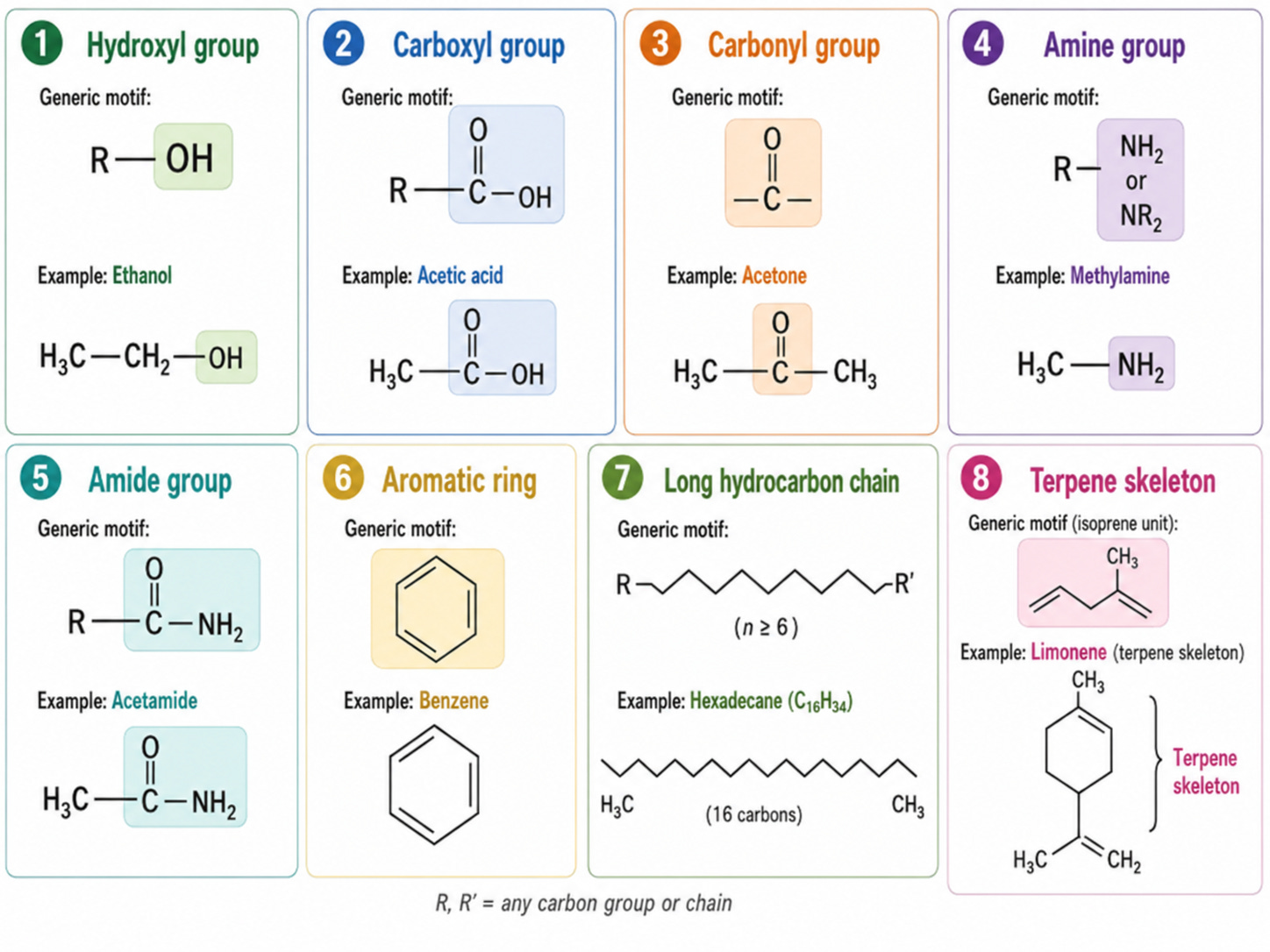
Figure 1: Phytochemical R-Groups Influencing Solubility
Ionization is a process where molecules gain or lose electrons, resulting in the formation of charged particles known as ions. Acidic or basic compounds may change charge as pH changes. The proportion of ionized molecules increases as the solution pH moves farther from the compound’s pKa in the direction that favors ionization. Because the ionized form is usually more water-compatible, this can substantially increase apparent aqueous solubility.
Some phytochemicals can exist in either an electrically neutral form or a charged form. The term pKa refers to the pH at which an ionizable group is approximately 50% charged and 50% uncharged. Acidic compounds become more negatively charged as pH rises above their pKa, while basic compounds become more positively charged as pH falls below their pKa. Each one-unit difference between pH and pKa changes the ionized-to-neutral ratio by about tenfold (Fig. 2).
Because charged forms are more hydrophylic and neutral forms more lipophilic, this relationship provides the basis for an acid–base shakeout, in which pH is adjusted to move a compound selectively between an aqueous phase and an immiscible organic phase. Total aqueous solubility includes the neutral form, which has a solubility reflecting how well the uncharged molecule dissolves in water, and ionized species that create more water-compatible forms.

Figure 2: Differences in Solvent pH vs Compound pKa Driving Aqueous Solubility
Two laboratories may obtain different concentrations from the same plant material if they use extraction solvents with different pH values. The pH can also change chromatographic retention, peak shape, chemical stability, and ionization efficiency during mass-spectrometric detection. A charged compound may be difficult to detect based on several factors, including forming a poorly soluble salt, interacting with other extract components, degrading under extreme pH, or remaining physically trapped within the plant matrix. A method should specify and control extraction pH.
Another structural feature, the presence or absence of a chromophore, can be used to decide on which detection method is best suited for the method. Molecules containing conjugated aromatic systems may absorb ultraviolet or visible light strongly enough for HPLC-UV or diode-array detection (Fig. 3). Compounds lacking a useful chromophore may require mass spectrometric, evaporative light-scattering, charged-aerosol, refractive-index, fluorescence, or derivatization-based detection.

Figure 3: Chromophores and UV-Light Detection
Molecular packing behavior is a final property to consider, including molecular size, planarity, symmetry, and intermolecular association. A molecule may water soluble but exhibit poor dissolution rates because it forms a stable crystal lattice. Planar aromatic compounds can stack efficiently through π–π interactions, while highly symmetrical molecules may pack tightly in a crystal (Fig. 4). Disrupting planarity or symmetry can increase solubility (Ishikawa & Hashimoto, 2011; Lewin et al., 2013).
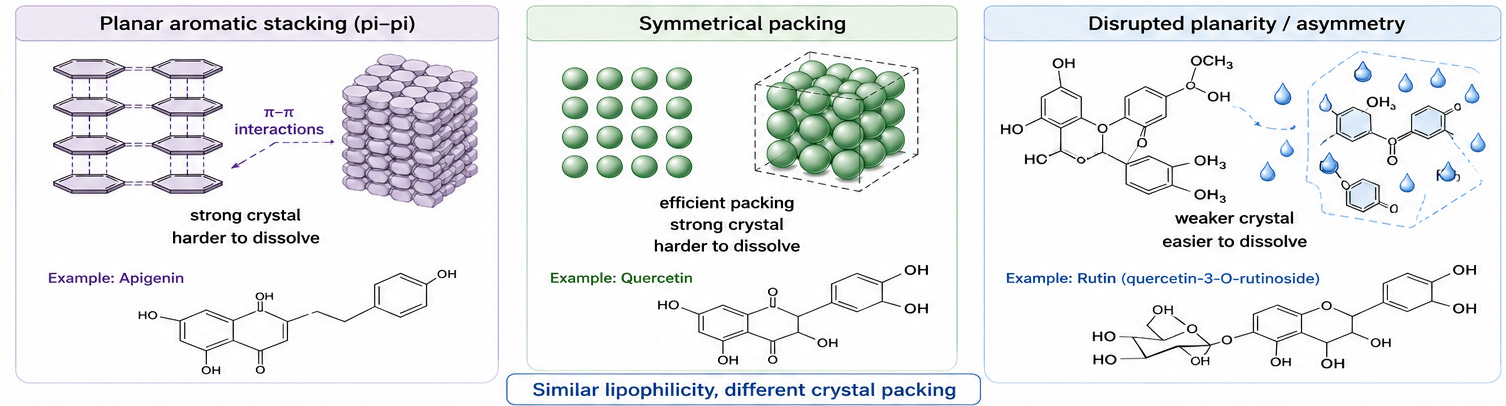
Figure 4: Molecular Size, Planarity, Symmetry, and Intermolecular Association Influencing Solubility
What Gets Extracted and What Stays Available
Phytochemicals must escape from the solid material in which they are packed. We’ve discussed some of the properties influencing the solvation of molecules above. This next section will be focused on understanding which complex of phytochemical characteristics effect extraction yield and discuss properties of specific classes of compounds.
Extraction methods overcome different barriers in various ways. Heating and microwave treatment add thermal energy. Ultrasound can disrupt plant tissue and molecular aggregates. Grinding increases surface area, while stirring or shaking reduces diffusion barriers between the plant material and solvent. Pressure can improve solvent penetration and permit extraction at higher temperatures. These interventions may increase recovery, but excessive treatment can also accelerate degradation or co-extraction. Their effects must therefore be tested for the target compounds and plant matrix (Chemat et al., 2017; Lefebvre et al., 2021).
Whole-herb and multicomponent matrices can alter both extraction recovery and apparent solubility by shifting phytochemicals among freely dissolved, colloid-associated, precipitated, and residual fractions. In classical TCM formula, Bai-Hu-Tang, naturally formed nanoscale aggregates containing mangiferin, glycyrrhizic acid, polysaccharides, and inorganic components increased the aqueous concentration of mangiferin 10x, although much of it was aggregate-associated rather than present as freely dissolved molecules (Lü et al., 2018).
In Huanglian Jiedu decoction, berberine and baicalin became concentrated in a self-assembled precipitate rather than remaining primarily in the supernatant (Chen et al., 2021). Gardenia fruit constituents, particularly crocins, appear to increase the solubility of the berberine–baicalin complex, demonstrating that an additional herb can partly reverse matrix-induced precipitation (Okoshi et al., 2021).
This speaks to a more nuanced and complex formulation process since total extract concentration does not show how much of a phytochemical is available for absorption. The key questions are whether the compound remains dissolved, becomes associated with particles, forms a precipitate, or stays trapped in the plant material. Testing should therefore examine how the compound is distributed, whether that distribution changes over time or during digestion, and whether the released form can cross an absorption barrier.
In Gegen-Qinlian decoction, the combined formula improved the transport of selected alkaloids, flavonoid glycosides, and coumarins compared with the corresponding individual-herb extracts, while triterpenoid saponins remained poorly permeable (Wang et al., 2017). Caco-2 testing uses a laboratory-grown intestinal cell layer to estimate intestinal permeability and absorption potential without directly measuring absorption in humans (Hubatsch et al., 2007).
There are specific molecular architectures that are likely to participate in matrix effects, including amphiphilic saponins that can self-assemble into aggregates because they contain both water-compatible sugar groups and a hydrophobic aglycone (Matsuoka et al., 2016). In whole-herb decoctions, glycyrrhizic-acid-containing aggregates have also been shown to carry poorly soluble constituents such as mangiferin (Lü et al., 2018).
Berberine carries a positive charge, while baicalin can carry a negative charge under relevant extraction conditions. This charge differential leads the two compounds to form an ion-paired complex. Depending on pH, concentration, ratio, and the surrounding matrix, that complex may remain dispersed in solution or aggregates into precipitate (Chen et al., 2021; Yang et al., 2024).
Oppositely charged alkaloids and acidic flavonoid glycosides may associate as soluble complexes or insoluble precipitates, as demonstrated for berberine and baicalin (Chen et al., 2021; Yang et al., 2024).
Tannins contain multiple hydroxyl groups and aromatic rings that allow them to simultaneously interact with extracted macromolecules, such as proteins, lipds and polysaccharides. Their size and multivalent structure can either create complexes that remain soluble, form colloids, or precipitate (Le Bourvellec & Renard, 2012).
These structural features also influence analytical calibration. Analysts must ensure that the solubility of reference standard and the same compound found in plant samples are close to equivalent. This is done by confirming complete standard dissolution, controlling solvent composition and temperature, as well as inspecting solutions for precipitation before and after dilution into the chromatographic mobile phase.
Review of Several Phytochemical Classes
Alkaloids
Alkaloids are a structurally diverse group of nitrogen-containing natural products. Many are basic, but the presence of nitrogen does not by itself determine basicity or water solubility. The nitrogen’s position and electronic environment determine whether it can accept a proton and become ionized (Heinrich et al., 2021).
A tertiary amine may acquire a positive charge under acidic conditions, whereas a quaternary ammonium alkaloid is permanently charged. Nitrogen incorporated into an amide or another resonance-stabilized structure is generally weakly basic or nonbasic. Alkaloids therefore cannot be treated as uniformly water-insoluble or soluble under acidic conditions.
For many basic alkaloids, the neutral free-base form partitions more readily into moderately nonpolar organic solvents. Protonation produces a charged salt that is usually more compatible with water or aqueous alcohol. Acidifying an extraction solvent can therefore increase recovery of protonatable alkaloids, while raising the pH may regenerate the free base and facilitate its transfer into an organic phase. This acid–base behavior can aid extraction and cleanup, but poorly selected conditions may co-extract other polar matrix constituents or degrade pH-sensitive compounds. Extraction pH should therefore be selected for the target alkaloids rather than for alkaloids as a single class.
Many alkaloids can be separated by reversed-phase HPLC or UHPLC. Aromatic or conjugated alkaloids may be detected by UV or diode-array detection, although detector response varies among structures. If the extract contains low-concentration compounds, closely related alkaloids, structural isomers, or analytes with weak UV absorption then LC-MS or LC-MS/MS should be used.
Terpenes and Terpenoids
Terpenes are defined as hydrocarbons assembled from isoprene-derived units. Molecules such as α-pinene, β-pinene, myrcene, and limonene, containing only carbon and hydrogen, are poorly soluble in water. Their volatility and lipophilicity make them compatible with extraction methods such as steam distillation, headspace sampling, oil extraction, and supercritical carbon dioxide extraction. Sometimes high ratio alcohol solutions can be used.
Oxygenated derivatives containing alcohol, aldehyde, ketone, ether, ester, epoxide, or carboxyl groups are described as terpenoids, although terpene is used informally for both groups. The presence of oxygen increases polarity but not to the point of being water-soluble. Linalool and geraniol contain hydroxyl groups that can form hydrogen bonds, but their ten-carbon skeletons remain largely hydrophobic. Linalyl acetate and geranyl acetate contain ester groups, which also increase polarity without increasing solubility in water.
The structure of volatile monoterpenes and many sesquiterpenes make gas chromatography a favorable analytical approach. Validated GC-MS methods have been applied to terpene measurement in complex botanical oils, including cannabis (Fernández et al., 2023). Larger or thermally unstable terpenoids, including diterpenoids, triterpenoids, carotenoids, terpene glycosides, and saponins, are better suited to HPLC or UHPLC. If the compounds lack strong UV chromophores or when closely related structures must be distinguished, LC-MS is a better choice.
Alkylamides
Plant alkylamides (alkamides) contain an amide group attached to a hydrocarbon chain. The latter lipophilic structure exerts the most influence on dissolution behavior even in the presence of nitrogen and oxygen. Because resonance reduces the basicity of the amide nitrogen, changing pH does not produce the same extraction behavior (Elufioye et al., 2020).
Echinacea alkylamides illustrate the analytical consequences. They contain related unsaturated chains and occur as multiple positional and geometric isomers. Aqueous alcohol can extract them and reversed-phase C18 chromatography can separate much of the resulting profile. Their unsaturation supports UV detection, but UV alone may not distinguish minor coeluting isomers. Mudge et al. (2011) used diode-array and mass-spectrometric detection to identify 24 alkylamides in Echinacea plant materials and dietary supplements, demonstrating the value of MS fragmentation when compounds differ primarily in double-bond position or configuration.
Tannins
Tannins are polyphenolic compounds that interact strongly with proteins and other macromolecules. They are commonly divided into hydrolysable and condensed tannins, but neither group has a single solubility profile.
Hydrolysable tannins contain galloyl-derived groups linked to a central polyol, commonly glucose, and include gallotannins and ellagitannins. Condensed tannins, or proanthocyanidins, are oligomers and polymers constructed from flavan-3-ol units such as catechin and epicatechin (Fraga-Corral et al., 2020).
Both groups contain numerous hydroxyl groups and can interact with polar solvents. Their recovery also depends on polymer size, galloylation, oxidation, stereochemistry, binding to cell-wall material, and complex formation with proteins or polysaccharides. Water may extract some tannins effectively, while aqueous ethanol may improve recovery of others. Increasing molecular size can reduce solubility and increase precipitation, adsorption, or matrix binding (Fraga-Corral et al., 2020; Le Bourvellec & Renard, 2012).
Hydrolysable tannins and smaller tannin constituents can often be separated by reversed-phase HPLC and characterized by UV or mass spectrometry. High-molecular-weight condensed tannins form broad molecular distributions that may be poorly resolved chromatographically or inefficiently transferred into a mass spectrometer. In those examples, phloroglucinolysis provides an alternative approach for condensed tannins. Acid treatment cleaves the polymers into terminal flavan-3-ols and extension-unit derivatives that can be measured by HPLC. The resulting profile can be used to estimate subunit composition and mean degree of polymerization. Kennedy and Jones (2001) established a widely used procedure for this analysis.
Flavonoids
Flavonoids are phenolic compounds with a C6–C3–C6 framework: two aromatic rings linked by a three-carbon unit that usually forms an oxygen-containing heterocyclic ring (Fig. 5). There’s a great deal of variability in this class of molecules produced by changes in substitution such as oxidation, saturation, methoxylation, glycosylation, hydroxylation as well as the substitution position. This alters both extraction behavior and analytical response.
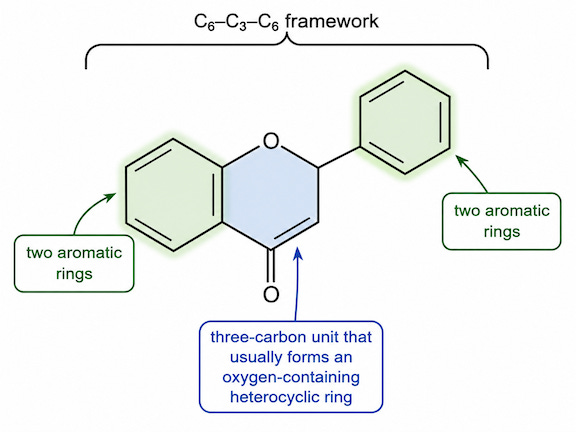
Figure 5: Flavonoid Structure
In general, glycosylation increased the solubility of water compared to the corresponding aglycone. However, the presence of various R-groups and ring structures impact hydrogen-bond donation and lipophilicity with a tendency of forming solid crystals (Hu et al., 2025). As an example, hydroxyl groups often increase hydrogen-bonding and polarity. With additional hydroxyl groups interaction with water and hydrogen bonding is strengthening within a crystalline assembly. Molecular planarity can stabilize crystal packing even more through aromatic stacking. This leads to the phenomena of greater number of polar groups but poor aqueous dissolution (Lewin et al., 2013). The optimum solvent depends on the target profile and plant matrix.
For analytical purposes, flavonoids are often compatible with reversed-phase HPLC and diode-array detection because their conjugated aromatic structures absorb ultraviolet light. Monitoring multiple wavelengths can improve detection across different flavonoid subclasses. Khuluk et al. (2021) validated an HPLC-DAD method for the simultaneous measurement of eight flavonoids in Sonchus arvensis.
An additional decision is whether to measure native glycosides and aglycones separately or hydrolyze the sample and report total aglycone equivalents. Hydrolysis can simplify quantification, but it removes information about the original constituent forms since glycosides and aglycones differ in extraction, stability, or biological effect.
Conclusion
Molecular structure is a practical screening tool. Structure helps predict how a constituent may respond to solvent polarity, pH, heat, and chromatographic conditions. Co-extracted compounds, colloids, precipitates, and processing conditions can change both recovery and the form in which a phytochemical remains available. The goal is to produce optimum extraction conditions and to recover the intended constituent profile and to measure them with a method capable of supporting a reproducible dose.
References
Chemat, F., Rombaut, N., Sicaire, A.-G., Meullemiestre, A., Fabiano-Tixier, A.-S., & Abert-Vian, M. (2017). Ultrasound assisted extraction of food and natural products: Mechanisms, techniques, combinations, protocols and applications. A review. Ultrasonics Sonochemistry, 34, 540–560. https://doi.org/10.1016/j.ultsonch.2016.06.035
Chen, M., Wang, P., Li, T., Li, L., Li, J., Bai, H., Lei, H., & Ma, Q. (2021). Comprehensive analysis of Huanglian Jiedu decoction: Revealing the presence of a self-assembled phytochemical complex in its naturally-occurring precipitate. Journal of Pharmaceutical and Biomedical Analysis, 195, 113820. https://doi.org/10.1016/j.jpba.2020.113820
Elufioye, T. O., Habtemariam, S., & Adejare, A. (2020). Chemistry and pharmacology of alkylamides from natural origin. Revista Brasileira de Farmacognosia, 30(5), 622–640. https://doi.org/10.1007/s43450-020-00095-5
Fernández, N., Lanosa, D. A., Janezic, N. S., & Quiroga, P. N. (2023). Development and validation of a GC-MS method for quantification of terpenes in cannabis oil (Cannabis sativa L.): Application to commercially available preparations in Argentina. Journal of Applied Research on Medicinal and Aromatic Plants, 35, 100466. https://doi.org/10.1016/j.jarmap.2023.100466
Fraga-Corral, M., García-Oliveira, P., Pereira, A. G., Lourenço-Lopes, C., Jimenez-Lopez, C., Prieto, M. A., & Simal-Gandara, J. (2020). Technological application of tannin-based extracts. Molecules, 25(3), 614. https://doi.org/10.3390/molecules25030614
Heinrich, M., Mah, J., & Amirkia, V. (2021). Alkaloids used as medicines: Structural phytochemistry meets biodiversity—An update and forward look. Molecules, 26(7), 1836. https://doi.org/10.3390/molecules26071836
Hu, L., Luo, Y., Yang, J., & Cheng, C. (2025). Botanical flavonoids: Efficacy, absorption, metabolism and advanced pharmaceutical technology for improving bioavailability. Molecules, 30(5), 1184. https://doi.org/10.3390/molecules30051184
Hubatsch, I., Ragnarsson, E. G. E., & Artursson, P. (2007). Determination of drug permeability and prediction of drug absorption in Caco-2 monolayers. Nature Protocols, 2(9), 2111–2119. https://doi.org/10.1038/nprot.2007.303
Ishikawa, M., & Hashimoto, Y. (2011). Improvement in aqueous solubility in small molecule drug discovery programs by disruption of molecular planarity and symmetry. Journal of Medicinal Chemistry, 54(6), 1539–1554. https://doi.org/10.1021/jm101356p
Kennedy, J. A., & Jones, G. P. (2001). Analysis of proanthocyanidin cleavage products following acid-catalysis in the presence of excess phloroglucinol. Journal of Agricultural and Food Chemistry, 49(4), 1740–1746. https://doi.org/10.1021/jf001030o
Khuluk, R. H., Yunita, A., Rohaeti, E., Syafitri, U. D., Linda, R., Lim, L. W., Takeuchi, T., & Rafi, M. (2021). An HPLC-DAD method to quantify flavonoids in Sonchus arvensis and able to classify the plant parts and their geographical area through principal component analysis. Separations, 8(2), 12. https://doi.org/10.3390/separations8020012
Le Bourvellec, C., & Renard, C. M. G. C. (2012). Interactions between polyphenols and macromolecules: Quantification methods and mechanisms. Critical Reviews in Food Science and Nutrition, 52(3), 213–248. https://doi.org/10.1080/10408398.2010.499808
Lefebvre, T., Destandau, E., & Lesellier, E. (2021). Selective extraction of bioactive compounds from plants using recent extraction techniques: A review. Journal of Chromatography A, 1635, 461770. https://doi.org/10.1016/j.chroma.2020.461770
Lewin, G., Maciuk, A., Moncomble, A., & Cornard, J.-P. (2013). Enhancement of the water solubility of flavone glycosides by disruption of molecular planarity of the aglycone moiety. Journal of Natural Products, 76(1), 8–12. https://doi.org/10.1021/np300460a
Lü, S., Su, H., Sun, S., Guo, Y., Liu, T., Ping, Y., & Li, Y. (2018). Isolation and characterization of nanometre aggregates from a Bai-Hu-Tang decoction and their antipyretic effect. Scientific Reports, 8, 12209. https://doi.org/10.1038/s41598-018-30690-5
Matsuoka, K., Miyajima, R., Ishida, Y., Karasawa, S., & Yoshimura, T. (2016). Aggregate formation of glycyrrhizic acid. Colloids and Surfaces A: Physicochemical and Engineering Aspects, 500, 112–117. https://doi.org/10.1016/j.colsurfa.2016.04.032
Mudge, E., Lopes-Lutz, D., Brown, P., & Schieber, A. (2011). Analysis of alkylamides in Echinacea plant materials and dietary supplements by ultrafast liquid chromatography with diode array and mass spectrometric detection. Journal of Agricultural and Food Chemistry, 59(15), 8086–8094. https://doi.org/10.1021/jf201158k
Okoshi, K., Uekusa, Y., Narukawa, Y., & Kiuchi, F. (2021). Solubility enhancement of berberine–baicalin complex by the constituents of Gardenia fruit. Journal of Natural Medicines, 75(1), 76–83. https://doi.org/10.1007/s11418-020-01446-1
Wang, Q., Kuang, Y., Song, W., Qian, Y., Qiao, X., Guo, D.-A., & Ye, M. (2017). Permeability through the Caco-2 cell monolayer of 42 bioactive compounds in the TCM formula Gegen-Qinlian decoction by liquid chromatography tandem mass spectrometry analysis. Journal of Pharmaceutical and Biomedical Analysis, 146, 206–213. https://doi.org/10.1016/j.jpba.2017.08.042
Yang, H., Wang, J., Tan, Q., Dong, Z., Yang, Z., Zhang, P., & Wang, W. (2024). Supramolecular interaction between berberine hydrochloride and baicalin in aqueous solution: Reaction kinetics, spectral analysis and dynamic simulation. Heliyon, 10(9), e29992. https://doi.org/10.1016/j.heliyon.2024.e29992