

During my post-doctoral research, I deployed enzyme assisted extraction (EAE) to enhance the yield of flavan-3-ols found in green tea. I experimented with pectinase, cellulase as well as multi-enzyme complexes produced by Aspergillus spp., Trichoderma reesei and Bacillus licheniformis. The optimized EAE method greatly improved the extraction yield of all analytes when compared to either Pressurized Fluid Extraction (PFE) or Ultrasound Assisted Extraction (UAE). However, during method development it became apparent that loss of flavan-3-ols occurred when extraction enzymes were present. Several reports (Le Bourvellec and Renard, 2005; Le Bourvellec et al., 2005; Le Bourvellec et al., 2004) suggested that phenolic compounds, like flavan-3-ols, would bond to pectin cell wall components and our initial enzymatic extraction experiments used only pectinase. Subsequent experiments included a post-enzymatic extraction step using protease incubation to limit the loss (Tims et al., 2008). What we left unexplored but has been in the back of my mind for many years is did the enzymatic extraction “unzip” cell wall matrix to enhance the release of longer chains of flavan-3-ols (polymers) as opposed to the monomer species we associate with analytical work in the field?
Although most cultures have fermented food as a staple in their dietary patterns, little has been reported on the use of fermentation as an herbal extraction method. The process may contribute more than just modifying solvent pH and is worth exploring by both herbal supplement companies and herbalist as a new medicine making method. Traditional texts provide some guidance. I’ll review examples of traditional methods of fermented extraction found reduced toxicity in the final product as well.
Traditional Uses

Ayurvedic Medicine
Traditional texts define the unit operation for fermented product based on dosage forms (Sandhana Kalpana), including substrate choices, inoculum sources (e.g., Woodfordia fruticosa as a fermenter/initiator), and process endpoints that can be translated into modern manufacturing controls and analytical standardization (Lal et al., 2009; Samantaray & Babu, 2018).
Texts describe the preparation of a decoction (kwatha) or expressed juice (swarasa), addition of fermentable substrates (typically jaggery, honey, or sugar), incorporation of a fermentative initiator such as Woodfordia fruticosa flowers (Dhataki), sealing of the vessel, and maturation until specific organoleptic and physicochemical endpoints are achieved. Modern peer-reviewed pharmaceutical studies treat these textual specifications as process-defining parameters to map them to measurable quality attributes (Lal et al., 2009; Samantaray & Babu, 2018).
Woodfordia fruticosa is described in classical texts as a fermentative adjunct and is now understood to function as a natural inoculum source. Its flowers harbor yeast and other fermentative microbiota and contribute fermentative enzymes and micronutrients that facilitate self-generated alcohol formation without external distillation. In modern evaluations of Asava–Arishta manufacturing, the presence of W. fruticosa is treated as a biological catalyst and starter culture equivalent, influencing fermentation rate, alcohol yield, and secondary metabolite transformation (Lal et al., 2009; Mulay & Khale, 2011).
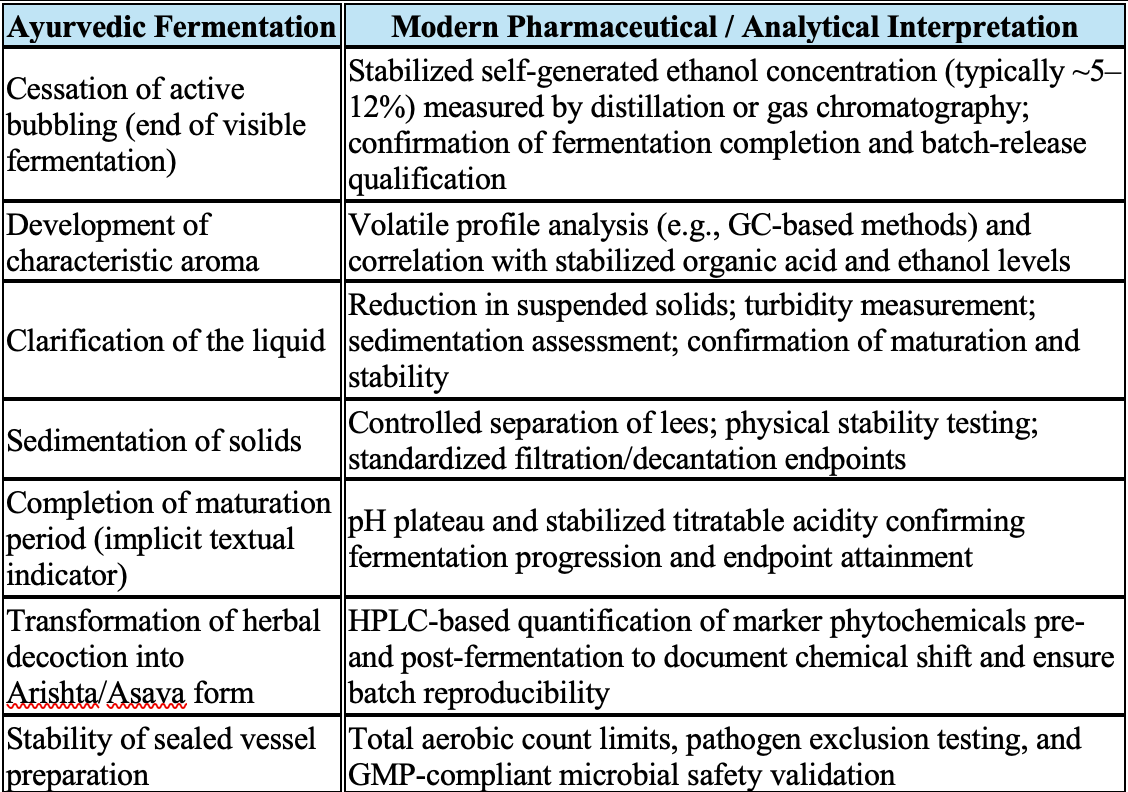
In Arjunarishta, analytical measurements demonstrates altered phenolic profiles and increased antioxidant activity in the final fermented product (Lal et al., 2009). Fermentation may also reduce formulation-level toxicity risk by shifting the chemical ensemble toward less reactive, less irritant, or less cytotoxic profiles through biotransformation and selective extraction, but this is not established as a generalizable human comparative outcome for Asava–Arishta versus non-fermented analogs (Mulay & Khale, 2011; Rizzello et al., 2013).
Traditional Chinese Medicine
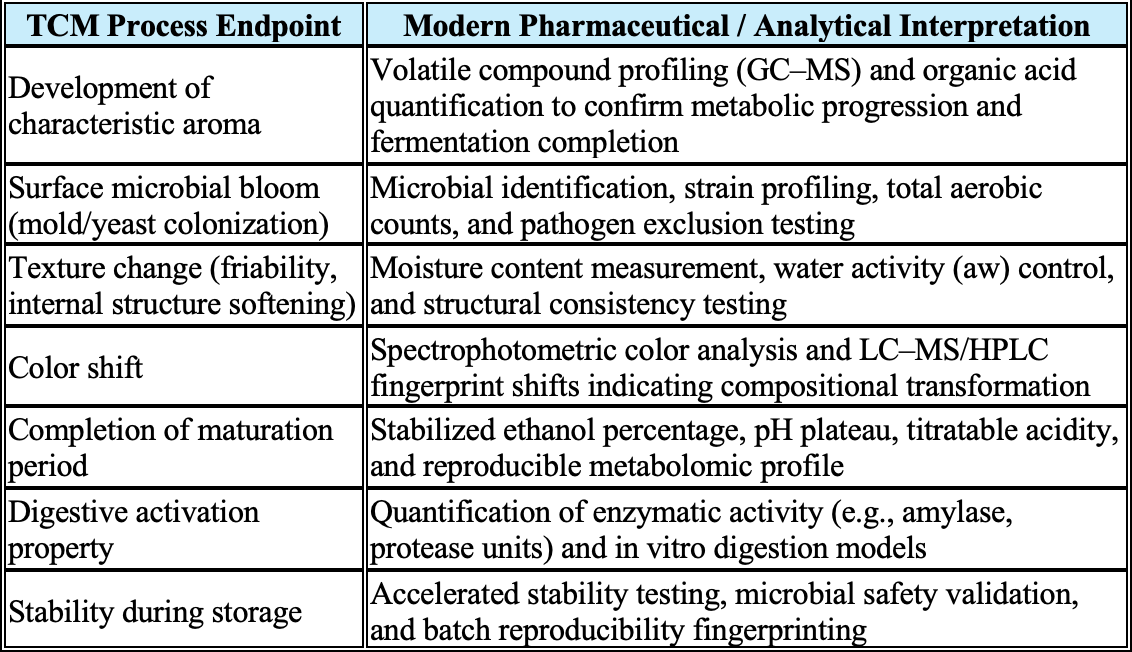
Traditional Chinese medicine (TCM) incorporates fermentation under multiple categories, including medicated leaven preparations (qu), fermented soybean products, and fermentation-based processing of specific crude drugs (paozhi). Among these, the most compelling example found in the primary research data is Massa Medicata Fermentata (Shenqu), a fermented composite of wheat flour and medicinal herbs that functions as both a digestive adjunct and a pharmaceutically defined fermentation product.
Classical materia medica describe a process of moistening the flour and herb mixture, inoculating with environmental microflora, shaping into bricks or cakes, and incubating until characteristic aroma, surface mycelial growth, and internal texture changes indicate completion. The product is then dried and used in decoctions to “aid digestion” and reduce food stagnation.
Modern analytical studies treat Shenqu as a fermentation-dependent transformation system. Metabolomic analyses using LC–MS show distinct shifts in amino acids, organic acids, and phenolic derivatives after fermentation (Zhang et al., 2019). These chemical changes correlate with increased amylase and protease activity intrinsic to the fermented mass, providing mechanistic plausibility for the classical indication of digestive enhancement (Zhang et al., 2019; review: Li et al., 2021).
Beyond a long history of clinical use in China, clinical trials specifically isolating Shenqu as a single intervention remain limited. In vitro human cell–based assays examining fermented herbal preparations demonstrate altered inflammatory signaling and oxidative stress markers compared with non-fermented counterparts, supporting the broader claim that fermentation modifies functional bioactivity profiles in ways relevant to human physiology (Rizzello et al., 2013).
The Table below provides a translation of measurable qualitative textual maturation markers into defined quality control endpoints suitable for standardized manufacturing.
Fermentation as a Unique Extraction Process
Fermentation can be treated as an extraction process when the operational goal is not only to solubilize pre-existing constituents but to generate an altered “extractable pool” through microbially mediated transformation inside the starting matrix (Khayatan et al., 2024). Fermentation separates and converts, because microbes and their enzymes act as biocatalysts that hydrolyze, oxidize/reduce, isomerize, or otherwise remodel phytochemicals while also degrading matrix barriers that constrain release (Khayatan et al., 2024; Kumari et al., 2024).
Rizzello et al. (2013) reported using a lactic acid fermentation with specific yeast strains that improved the antioxidant activity of Echinacea purpurea. They compared fermentation extraction to either a methanol or water extract without fermentation. The greatest antimicrobial activity was associated with low molecular mass compounds negated in the presence of digestive enzymes, suggesting small peptides as the active agent. The authors cited other experiments with grapes, soy and cereal grains where the fermentation process increased bioavailability of certain compounds and produced novel chemical species.
Mechanistic Basis: What Fermentation “Extracts” That Solvents Often Do Not
A solvent can only extract what is already present in an extractable form under the solvent’s physicochemical constraints. Fermentation expands that space through four main mechanisms.
Enzymatic deconjugation increases apparent extractability by converting poorly permeable or matrix-bound conjugates into smaller, more diffusible species. In plant foods, this is commonly framed as release/conversion of glycosylated, polymeric, or cell-wall-associated phenolics into forms that are more readily recovered and more bio accessible (Verni et al., 2019).
Microbial metabolism can acidify the environment, activate endogenous plant enzymes, and produce cell-wall-degrading activities that increase diffusion and liberation from compartments even when the nominal “solvent” remains water-based.
Finally, the same substrate can yield different chemical outputs depending on the starter’s enzyme repertoire. A clear example is the report that Lactobacillus fermentation of Cynanchi atrati Radix produced a markedly different HPLC profile, a functional loss of cytotoxicity with emergence of anti-melanin activity not reproduced by other bacterial species tested (Son et al., 2020).
References
1. Khayatan, D., Nouri, K., Momtaz, S., Roufogalis, B. D., Alidadi, M., Jamialahmadi, T., Abdolghaffari, A. H., & Sahebkar, A. (2024). Plant-derived fermented products: An interesting concept for human health. Current Developments in Nutrition, 8, 102162. https://doi.org/10.1016/j.cdnut.2024.102162
2. Kumari, H., Babu, V., Sharma, N., & Singh, B. (2024). Microbial transformation of phytochemicals: A review. Fitoterapia, 178, 106149. https://doi.org/10.1016/j.fitote.2024.106149
3. Lal, U. R., Tripathi, S. M., Jachak, S. M., Bhutani, K. K., & Singh, I. P. (2009). HPLC analysis and standardization of Arjunarishta: An Ayurvedic cardioprotective formulation. Scientia Pharmaceutica, 77(3), 605–616. https://doi.org/10.3797/scipharm.0906-03
4. Le Bourvellec, C., Bouchet, B., Renard, C.M.G.C., 2005. Non-covalent interaction between procyanidins and apple cell wall material. Part III: Study on model polysaccharides. Biochimica Et Biophysica Acta-General Subjects 1725, 10-18.
5. Le Bourvellec, C., Guyot, S., Renard, C.M.G.C., 2004. Non-covalent interaction between procyanidins and apple cell wall material Part I. Effect of some environmental parameters. Biochimica Et Biophysica Acta-General Subjects 1672, 192-202.
6. Le Bourvellec, C., Renard, C.M.G.C., 2005. Non-covalent interaction between procyanidins and apple cell wall material. Part II: Quantification and impact of cell wall drying. Biochimica Et Biophysica Acta-General Subjects 1725, 1-9.
7. Li, X., Zhang, Y., Wang, Y., & Chen, J. (2021). Research progress on Massa Medicata Fermentata (Shenqu): Chemical composition and pharmacological activities. Journal of Ethnopharmacology, 270, 113818. https://doi.org/10.1016/j.jep.2021.113818
8. Mishra, A. K., Gupta, A., Gupta, V., Sand, R., & Bansal, P. (2010). Asava and arishta: An Ayurvedic medicine – An overview. International Journal of Pharmaceutical & Biological Archives, 1(1), 24–30.
9. Mulay, S., & Khale, A. (2011). Asavarishtas through improved fermentation technology. International Journal of Pharmaceutical Sciences and Research, 2(6), 1421–1425. https://doi.org/10.13040/IJPSR.0975-8232.2(6).1421-25
10. Rizzello, C. G., Coda, R., Macías, D. S., Pinto, D., Marzani, B., Filannino, P., Giuliani, G., Paradiso, V. M., & Gobbetti, M. (2013). Lactic acid fermentation as a tool to enhance the functional features of Echinacea spp. Microbial Cell Factories, 12, 44. https://doi.org/10.1186/1475-2859-12-44
11. Samantaray, M. K., & Babu, S. (2018). The pharmaceutical evaluation of Draksharishta. Journal of Ayurveda and Integrated Medical Sciences, 3(6). https://doi.org/10.21760/jaims.v3i06.539
12. Son, C. G., Lee, S. K., Choi, I. K., Jang, E. S., & Bang, K. J. (2020). Herbal transformation by fermentation. Journal of Acupuncture and Meridian Studies, 13(5), 167–168. https://doi.org/10.1016/j.jams.2020.10.001
13. Tims, M.C., Sander, L. and Sharpless, K.E. (2008) Detection and Extraction Method Development for Characterizing Medicinally Relevant Plant Metabolites in Green Tea (Camellia sinensis) Standard Reference Materials. HPLC 2008: 32th International Symposium on High Performance Liquid Phase Separations, Baltimore MD.
14. Verni, M., Verardo, V., & Rizzello, C. G. (2019). How fermentation affects the antioxidant properties of cereals and legumes. Foods, 8(9), 362. https://doi.org/10.3390/foods8090362
15. Zhang, Y., Li, X., Wang, Y., & Chen, J. (2019). Metabolomic profiling of Massa Medicata Fermentata reveals fermentation-induced chemical transformation. Food Research International, 120, 700–708. https://doi.org/10.1016/j.foodres.2018.11.039