

This essay builds on ideas developed in our recent paper (Tims et al., 2025), with new analysis and commentary. One of my coauthors, John Courie, is active on Substack. You should give him a read.
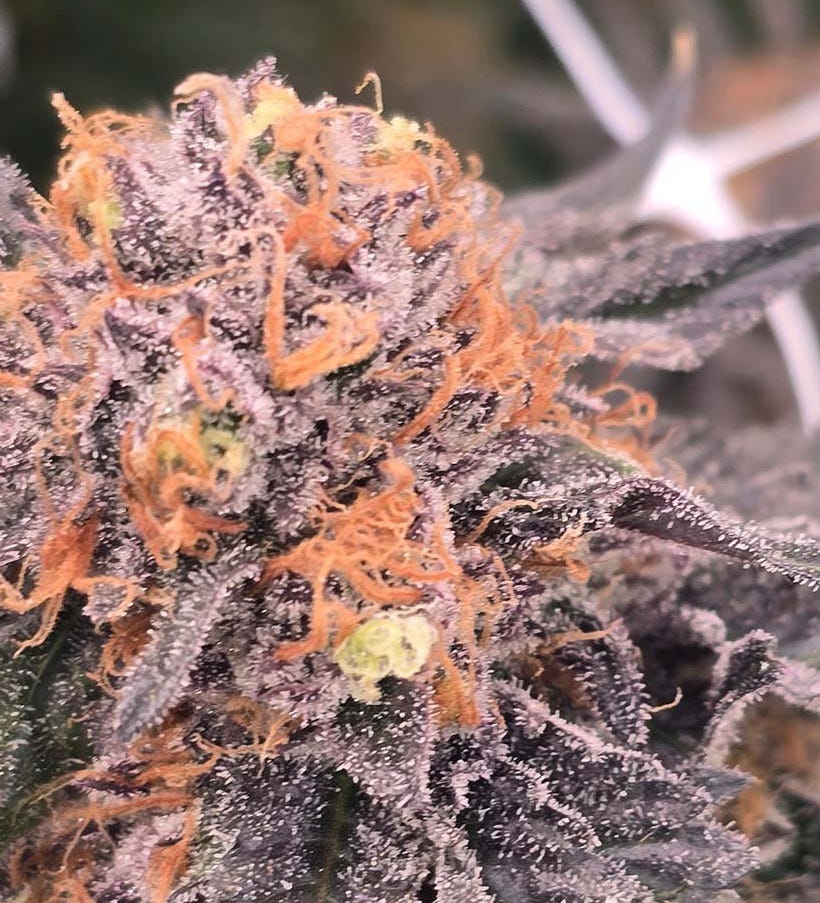
Cannabis glandular trichomes function as epidermis-derived secretory organs that integrate biosynthesis, compartmentalized storage, and ecological signaling to produce cannabinoids and terpenes. As in other glandular trichome systems, these metabolites serve defensive roles against biotic and abiotic stress while being physically segregated from primary metabolism to avoid autotoxicity (Huchelmann et al., 2017). In Cannabis sativa, this segregation is essential because cannabinoids can induce mitochondrial permeability, DNA degradation, and programmed cell death in plant tissues if not sequestered (Morimoto et al., 2007; Shoyama et al., 2008).
Shared precursor pathways and metabolic branching
Cannabinoid and terpene biosynthesis in cannabis are coupled through shared precursor pools rather than operating as independent pathways. Monoterpenes and the cannabinoid backbone converge at geranyl pyrophosphate (GPP), which is produced predominantly via the plastidial 2-methyl-D-erythritol-4-phosphate (MEP) pathway. GPP serves both as the direct substrate for monoterpene synthases and as the prenyl donor in the condensation reaction between GPP and olivetolic acid that forms cannabigerolic acid (CBGA), the central precursor for major cannabinoids (Walsh et al., 2021; Livingston et al., 2022). This shared branch point creates an inherent metabolic competition in which flux toward volatile terpenes or toward cannabinoid acids depends on precursor availability, enzyme localization, and regulatory context rather than on isolated gene expression alone.
Downstream cannabinoid ratios are determined primarily by terminal synthases that compete for CBGA. The genes encoding tetrahydrocannabinolic acid synthase (THCAs), cannabidiolic acid synthase (CBDAs), and cannabichromenic acid synthase are expressed constitutively within a given chemotype, and their relative activities remain largely stable across floral development (Aizpurua-Olaizola et al., 2016; Pacifico et al., 2008). Consequently, changes in total cannabinoid accumulation during flowering correlate more strongly with trichome maturation, gland size, and secretory capacity than with changes in synthase transcript abundance (Livingston et al., 2020). In contrast, genes involved in precursor supply, such as geranyl pyrophosphate synthase and olivetolic acid cyclase, show greater sensitivity to developmental and environmental cues, positioning precursor flux as a primary regulatory lever.
Cellular microenvironments and storage dynamics
Cannabis glandular trichomes operate as polarized multicellular “supercells” in which plastids, endoplasmic reticulum, plasma membrane, and vacuoles are spatially coordinated to channel hydrophobic metabolites toward an extracellular storage cavity (Livingston et al., 2022). Terpene biosynthesis occurs mainly in plastids, while CBGA formation is catalyzed at plastid–plasma membrane interfaces by aromatic prenyltransferases. Acidic cannabinoid synthases are localized to the apoplastic side of the cell wall adjacent to the storage cavity, ensuring rapid sequestration of products away from the cytosol (Tanney et al., 2021).
The resin head is not a passive reservoir. Analyses of trichome exudate show the presence of amphiphilic and hydrophilic constituents that form micellar or emulsion-like microenvironments, allowing enzymes to remain catalytically active under highly hydrophobic conditions (Rodziewicz et al., 2019). Reverse micelle-like structures and acidic vacuolar conditions further stabilize enzymatic activity and concentrate secondary metabolites, blurring the boundary between biosynthesis and storage (Klyachko & Levashov, 2003; Taiz, 1992). This architecture explains how cannabinoids and terpenes can continue to accumulate late in flower development even when cytosolic metabolism is downregulated.
The levels of trichome metabolite production is constrained by sink capacity and metabolic enzyme levels. Cell-wall subdomain remodeling is temporally staged and appears necessary to create/expand the extracellular storage cavity that ultimately holds resin (Livingston et al., 2021). Their ultrastructure analysis showed abundant contact sites linking plastids to the ER to the plasma membrane, with the final THCA-forming step localized at the cell wall facing the storage cavity.
Coordinated regulation of central and secondary metabolism suggests that upstream metabolic capacity exerts primary control over cannabinoid and terpene accumulation (Yeo et al., 2022), implying that downstream enzymatic responses are bounded by upstream flux limitations. Then trichome productivity depends on imported precursors and coordinated networks spanning cannabinoid and terpene biosynthesis (Zager et al., 2019), which is supported by proteomic analyses showing a strong sink model where glandular trichome head disc and cap cells depends on assimilates supplied by surrounding floral tissues for carbon and energy inputs as a control point linking ecosystem conditions to secondary metabolite production (Conneely et al., 2021).
Large-scale genotyping demonstrates that traditional taxonomic labels and commercial strain names do not correspond to genome-wide genetic structure (Sawler et al., 2015; Watts et al., 2021), whereas chemovars—defined by reproducible terpene and cannabinoid profiles—are associated with localized genetic variation, particularly within tandem arrays of terpene synthase genes (Watts et al., 2021).
Triggers that bias allocation between cannabinoids and terpenes
Because cannabinoids and monoterpenes draw from the same precursor pool, regulatory signals that alter trichome development or precursor supply inherently bias metabolic allocation. Three major classes of triggers have been identified.
Firstly, abiotic stressors such as water deficit, temperature variation, and light quality modify precursor routing and storage dynamics. Controlled drought stress increases cannabinoid yield per inflorescence without proportionally increasing biomass, suggesting preferential allocation toward carbon-rich defense metabolites under resource limitation (Caplan et al., 2019). Light spectrum effects are more pronounced for terpenes than cannabinoids, with blue and UV-adjacent wavelengths enhancing terpene synthesis late in flowering, again implicating plastid activity and precursor flow rather than changes in cannabinoid synthase expression (Namdar et al., 2019).
Secondly, biotic and ecosystem-level inputs introduce pulsed and heterogeneous signals that favor chemical diversity. Herbivory induces jasmonate- and ethylene-mediated signaling cascades that elevate terpene emission for indirect defense while also increasing neutral cannabinoids in damaged tissues (Kostanda & Khatib, 2022). Microbial symbioses in the rhizosphere and as endophytes further modulate phytohormone pools, nitrogen availability, and stress signaling, indirectly shaping trichome density and secondary metabolite profiles (Taghinasab & Jabaji, 2020). Comparable patterns in other glandular trichome-bearing medicinal plants show that increased ecological complexity correlates with broader and more variable secondary metabolite spectra rather than maximal accumulation of a single compound (Huchelmann et al., 2017).
Cannabis trichomes are best understood as ecologically tunable metabolic branch points rather than containing a fixed cannabinoid metabolic pathway. Cannabinoid-dominant, terpene-rich, or balanced profiles emerge from how shared precursors are partitioned in response to developmental stage, hormonal balance, and ecosystem context. This framework situates cannabis within a broader chemical ecology paradigm in which diversity and responsiveness, rather than maximal yield of a single metabolite, represent the adaptive norm (Tims et al., 2025).
Lastly, phytohormonal cross-talk strongly influences trichome density and metabolic output. From the previous posting, hormones influence cannabinoid production. They also impact the trichome structure. Jasmonic acid and its methylated derivative increase glandular trichome initiation, trichome size, and terpene production across multiple plant species, including cannabis, while also elevating total cannabinoid content primarily through expanded secretory capacity (Boughton et al., 2005; Jalali et al., 2019).
Exogenous application of salicylic acid and GABA under controlled conditions alters expression of cannabinoid-pathway genes, demonstrating pathway sensitivity to specific signaling molecules, though outside the full temporal and developmental hormone feedback context present in intact plants (Jalali et al., 2019).
In general, exogenous application of plant hormones or signaling compounds is widely recognized as a context-limited perturbation because endogenous hormone action operates within tightly coupled feedback networks that are both temporally dynamic and developmentally contingent. Primary research demonstrates that the magnitude and even the direction of hormonal effects depend strongly on concentration, timing, and the presence of interacting signaling pathways, such that identical signals can produce synergistic, antagonistic, or cytotoxic outcomes depending on context (Mur et al., 2006). Transcriptomic studies further show that hormone-induced responses occur in discrete temporal waves, with rapid induction followed by attenuation or reversal, underscoring that single-time-point elicitation cannot capture the dynamic regulatory landscape in intact plants (Stroud et al., 2022).
Reviews of plant hormone signaling emphasize that cross-talk among salicylic acid, jasmonates, ethylene, abscisic acid, auxin, and other regulators is a defining feature of endogenous control rather than an exception. As a result, no individual hormone acts in isolation under natural conditions, and downstream metabolic outcomes emerge from network-level integration rather than linear causation (Gilroy & Breen, 2022; Hou & Tsuda, 2022). Importantly, the structure of these networks changes across developmental stages, with the same hormonal signal having distinct effects depending on tissue identity, developmental phase, and physiological state (Wang & Irving, 2011).
References
1. Adamek, K., Torkamaneh, D., & Jones, A. M. P. (2022). Accumulation of somatic mutations leads to genetic mosaicism in cannabis. The Plant Genome, 15(1), e20169. https://doi.org/10.1002/tpg2.20169
2. Aizpurua-Olaizola, O., Soydaner, U., Öztürk, E., Schibano, D., Simsir, Y., Navarro, P., Etxebarria, N., & Usobiaga, A. (2016). Evolution of the cannabinoid and terpene content during the growth of Cannabis sativa plants from different chemotypes. Journal of Natural Products, 79(2), 324–331. https://doi.org/10.1021/acs.jnatprod.5b00949
3. Booth, J. K., Yuen, M. M. S., Jancsik, S., Madilao, L. L., Page, J. E., & Bohlmann, J. (2017). Terpene synthases from Cannabis sativa. PLOS ONE, 12(3), e0173911. https://doi.org/10.1371/journal.pone.0173911
4. Boughton, A. J., Hoover, K., & Felton, G. W. (2005). Methyl jasmonate application induces increased densities of glandular trichomes on tomato, Lycopersicon esculentum. Journal of Chemical Ecology, 31(9), 2211–2216. https://doi.org/10.1007/s10886-005-6228-7
5. Caplan, D., Dixon, M., & Zheng, Y. (2019). Increasing inflorescence dry weight and cannabinoid content in medical cannabis using controlled drought stress. HortScience, 54(5), 964–969. https://doi.org/10.21273/HORTSCI13510-18
6. Conneely, L. J., Mauleon, R., Mieog, J., Barkla, B. J., & Kretzschmar, T. (2021). Characterization of the Cannabis sativa glandular trichome proteome. PLOS ONE, 16(4), e0242633. https://doi.org/10.1371/journal.pone.0242633
7. Dimopoulos, N., Guo, Q., Liu, L., Nolan, M., et al. (2025). An in vitro phytohormone survey reveals concerted regulation of the cannabis glandular trichome disc cell proteome. Plants, 14(5), 694. https://doi.org/10.3390/plants14050694
8. Gilroy, E., & Breen, S. (2022). Interplay between phytohormone signalling pathways in plant defence: Other than salicylic acid and jasmonic acid. Essays in Biochemistry, 66(5), 657–671. https://doi.org/10.1042/EBC20210089
9. Hou, S., & Tsuda, K. (2022). Salicylic acid and jasmonic acid crosstalk in plant immunity. Essays in Biochemistry, 66(5), 647–656. https://doi.org/10.1042/EBC20210090
10. Huchelmann, A., Boutry, M., & Hachez, C. (2017). Plant glandular trichomes: Natural cell factories of high biotechnological interest. Plant Physiology, 175(1), 6–22. https://doi.org/10.1104/pp.17.00727
11. Jalali, S., Salami, S. A., Sharifi, M., & Sohrabi, S. (2019). Signaling compounds elicit expression of key genes in cannabinoid pathway and related metabolites in cannabis. Industrial Crops and Products, 133, 105–110. https://doi.org/10.1016/j.indcrop.2019.03.004
12. Klyachko, N. L., & Levashov, A. V. (2003). Bioorganic synthesis in reverse micelles and related systems. Current Opinion in Colloid & Interface Science, 8(2), 179–186. https://doi.org/10.1016/S1359-0294(03)00016-5
13. Kostanda, E., & Khatib, S. (2022). Biotic stress caused by Tetranychus urticae mites elevates the quantity of secondary metabolites, cannabinoids and terpenes, in Cannabis sativa L. Industrial Crops and Products, 176, 114331. https://doi.org/10.1016/j.indcrop.2021.114331
14. Livingston, S. J., Bae, E. J., Unda, F., et al. (2021). Cannabis glandular trichome cell walls undergo spatiotemporal remodeling at specific wall subdomains to facilitate storage cavity formation and metabolite storage. Plant and Cell Physiology. https://doi.org/10.1093/pcp/pcab127
15. Livingston, S. J., Quilichini, T. D., Booth, J. K., Wong, D. C. J., Rensing, K. H., Laflamme-Yonkman, J., Castellarin, S. D., Bohlmann, J., Page, J. E., & Samuels, A. L. (2020). Cannabis glandular trichomes alter morphology and metabolite content during flower maturation. The Plant Journal, 101(1), 37–56. https://doi.org/10.1111/tpj.14516
16. Livingston, S. J., Rensing, K. H., Page, J. E., & Samuels, A. L. (2022). A polarized supercell produces specialized metabolites in cannabis trichomes. Current Biology, 32(18), 4040–4047.e4. https://doi.org/10.1016/j.cub.2022.07.014
17. Morimoto, S., Tanaka, Y., Sasaki, K., Tanaka, H., Fukamizu, T., Shoyama, Y., & Morimoto, K. (2007). Identification and characterization of cannabinoids that induce cell death through mitochondrial permeability transition in cannabis leaf cells. Journal of Biological Chemistry, 282(28), 20739–20751. https://doi.org/10.1074/jbc.M700133200
18. Namdar, D., Charuvi, D., Ajjampura, V., Mazuz, M., Ion, A., Kamara, I., Koltai, H., & Gorelick, J. (2019). LED lighting affects the composition and biological activity of Cannabis sativa secondary metabolites. Industrial Crops and Products, 132, 177–185. https://doi.org/10.1016/j.indcrop.2019.02.016
19. Pacifico, D., Miselli, F., Carboni, A., Moschella, A., Mandolino, G., & Carboni, A. (2008). Time course of cannabinoid accumulation and chemotype development during the growth of Cannabis sativa L. Euphytica, 160(2), 231–240. https://doi.org/10.1007/s10681-007-9543-y
20. Rodziewicz, P., Loroch, S., Marczak, Ł., Kayser, O., & Stehle, F. (2019). Cannabinoid synthases and osmoprotective metabolites accumulate in the exudates of Cannabis sativa L. glandular trichomes. Plant Science, 284, 108–116. https://doi.org/10.1016/j.plantsci.2019.04.008
21. Mur, L. A. J., Kenton, P., Atzorn, R., Miersch, O., & Wasternack, C. (2006). The outcomes of concentration-specific interactions between salicylate and jasmonate signaling include synergy, antagonism, and oxidative stress leading to cell death. Plant Physiology, 140(1), 249–262. https://doi.org/10.1104/pp.105.072348
22. Shoyama, Y., Sugawa, C., Tanaka, H., & Morimoto, S. (2008). Cannabinoids act as necrosis-inducing factors in Cannabis sativa. Plant Signaling & Behavior, 3(12), 1111–1112. https://doi.org/10.4161/psb.3.12.7011
23. Stroud, E. A., Jayaraman, J., Templeton, M. D., & Rikkerink, E. H. A. (2022). Comparison of the pathway structures influencing the temporal response of salicylate and jasmonate defence hormones in Arabidopsis thaliana. Frontiers in Plant Science, 13, 952301. https://doi.org/10.3389/fpls.2022.952301
24. Taiz, L. (1992). The plant vacuole. Journal of Experimental Biology, 172(1), 113–122. https://doi.org/10.1242/jeb.172.1.113
25. Tims, M., Courie, J., & Betz, J. M. (2025). Using chemical ecology as a guide for development and differentiation of clinically relevant phytochemical profiles in cannabis trichomes. Cannabis and Cannabinoid Research. https://doi.org/10.1177/25785125251391985
26. Walsh, K. B., McKinney, A. E., & Holmes, A. E. (2021). Minor cannabinoids: Biosynthesis, molecular pharmacology and potential therapeutic uses. Frontiers in Pharmacology, 12, 777804. https://doi.org/10.3389/fphar.2021.777804
27. Wang, Y.-H., & Irving, H. R. (2011). Developing a model of plant hormone interactions. Plant Signaling & Behavior, 6(4), 494–500. https://doi.org/10.4161/psb.6.4.14558
28. Watts, S., McElroy, M., Migicovsky, Z., Maassen, H., van Velzen, R., & Myles, S. (2021). Cannabis labelling is associated with genetic variation in terpene synthase genes. Nature Plants, 7(10), 1330–1334. https://doi.org/10.1038/s41477-021-01003-y (PubMed)
29. Yeo, H. C., Reddy, V. A., Mun, B.-G., et al. (2022). Comparative transcriptome analysis reveals coordinated transcriptional regulation of central and secondary metabolism in the trichomes of cannabis cultivars. International Journal of Molecular Sciences, 23(15), 8310. https://doi.org/10.3390/ijms23158310
30. Zager, J. J., & Lange, B. M. (2019). Gene networks underlying cannabinoid and terpenoid accumulation in cannabis. Plant Physiology, 180(4), 1877–1897. https://doi.org/10.1104/pp.18.01506